Lowriding is having a major cultural moment in America—but calling it a “car trend” misses the point.
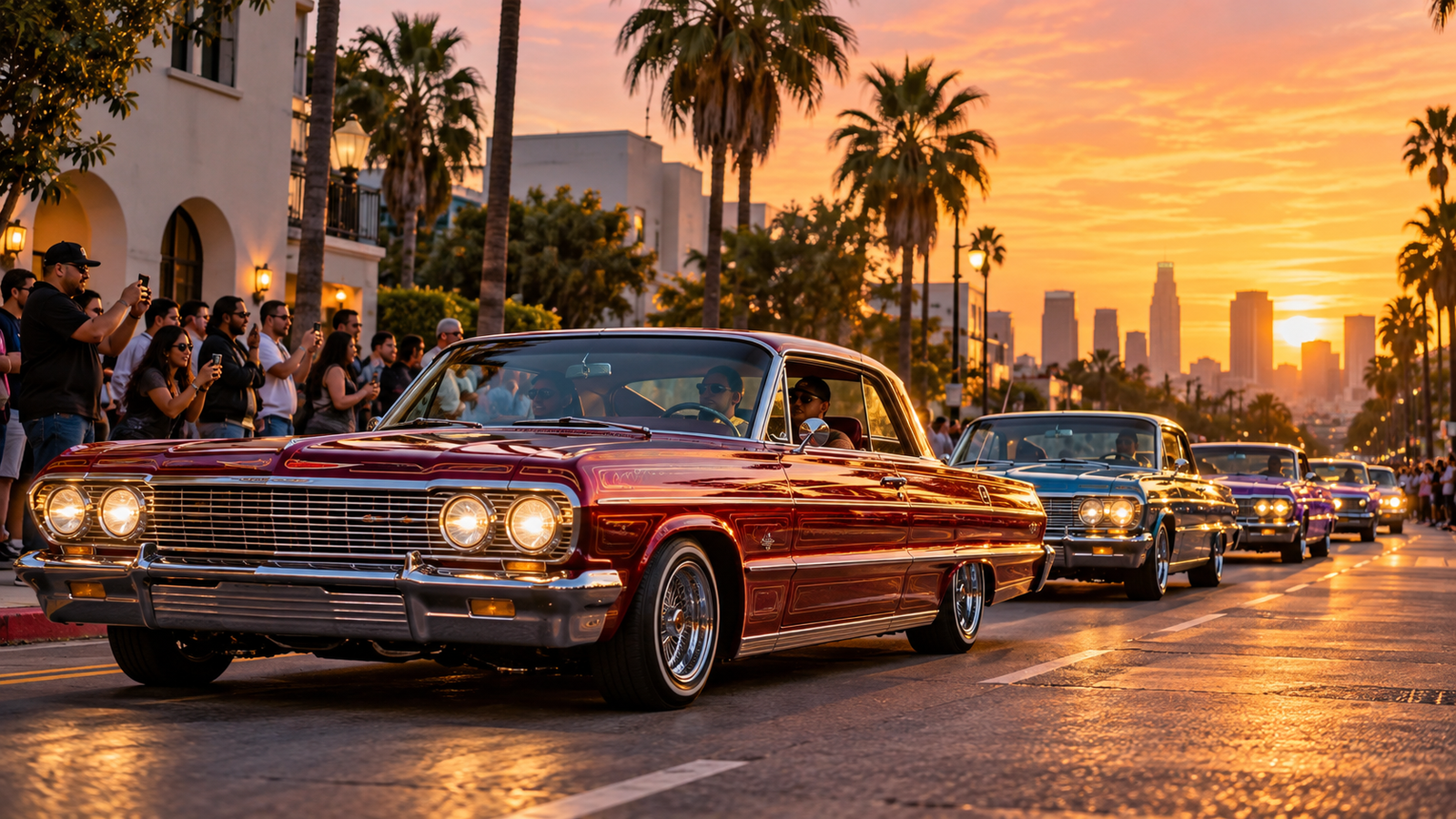
In September, San Francisco’s Mission Street filled with lowriders for the annual King of the Streets event during Hispanic Heritage Month. The gathering came as the culture is receiving broader recognition beyond the neighborhoods that have carried it for generations. In March, the U.S. Postal Service issued five commemorative Lowriders Forever stamps. The Smithsonian has also placed lowriding in a national museum context through its Corazón y vida: Lowriding Culture exhibition.
That attention matters. It is not about making something “official” for the first time. It is about more people finally recognizing that lowriding has always been art, identity, family, and storytelling on four wheels.
It is a culture, not just a customized car
The Smithsonian describes lowriding as a combination of artistic expression, technological innovation, and storytelling that reflects Mexican American and Chicano culture and identity. The cars may sit low, shine with chrome, and feature elaborate paintwork, but the real point is the care behind every choice.
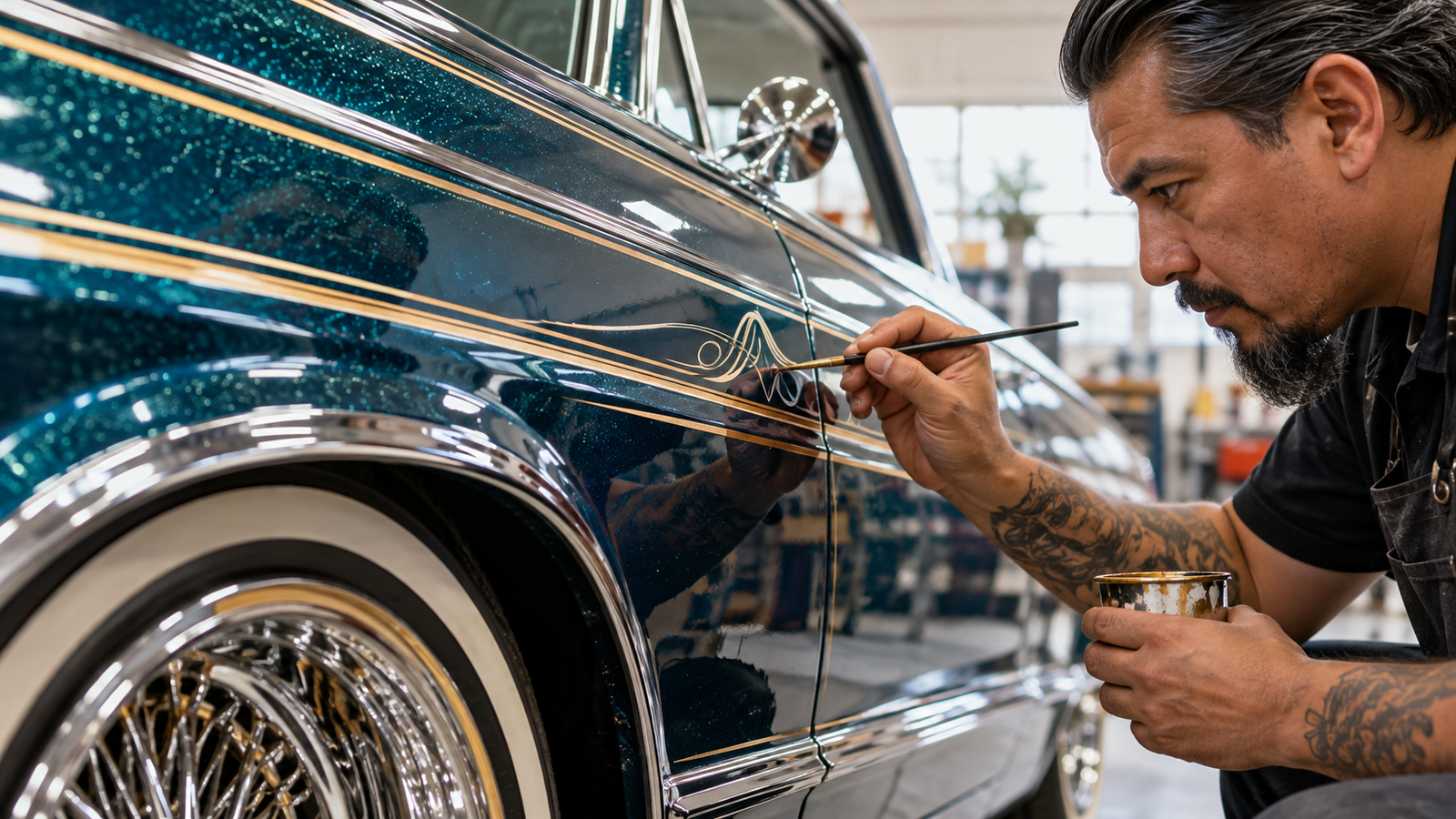
For decades, lowriders have given builders a way to turn a familiar car into something personal and memorable. Paint, upholstery, pinstriping, hydraulics, music, photographs, and family history can all become part of the message. A great lowrider is not simply expensive—it is specific. It tells you something about the people who built it and the community around it.
Why the wider recognition is happening now
The most interesting part of this moment is that the recognition is coming from places that once rarely made room for the culture. The Smithsonian’s exhibition frames lowriding as an American cultural story. The Postal Service’s 2026 stamp release brings that story into millions of everyday mailboxes.
At the same time, public cruises, car gatherings, videos, and family archives make it easy for younger audiences to see the artistry behind the cars. But there is an important difference between discovering a culture and claiming it. Lowriding did not become meaningful because a museum or a stamp series noticed it. Those institutions are catching up to a legacy that Mexican American and Chicano communities have been creating and protecting for decades.
The community part is what people often miss
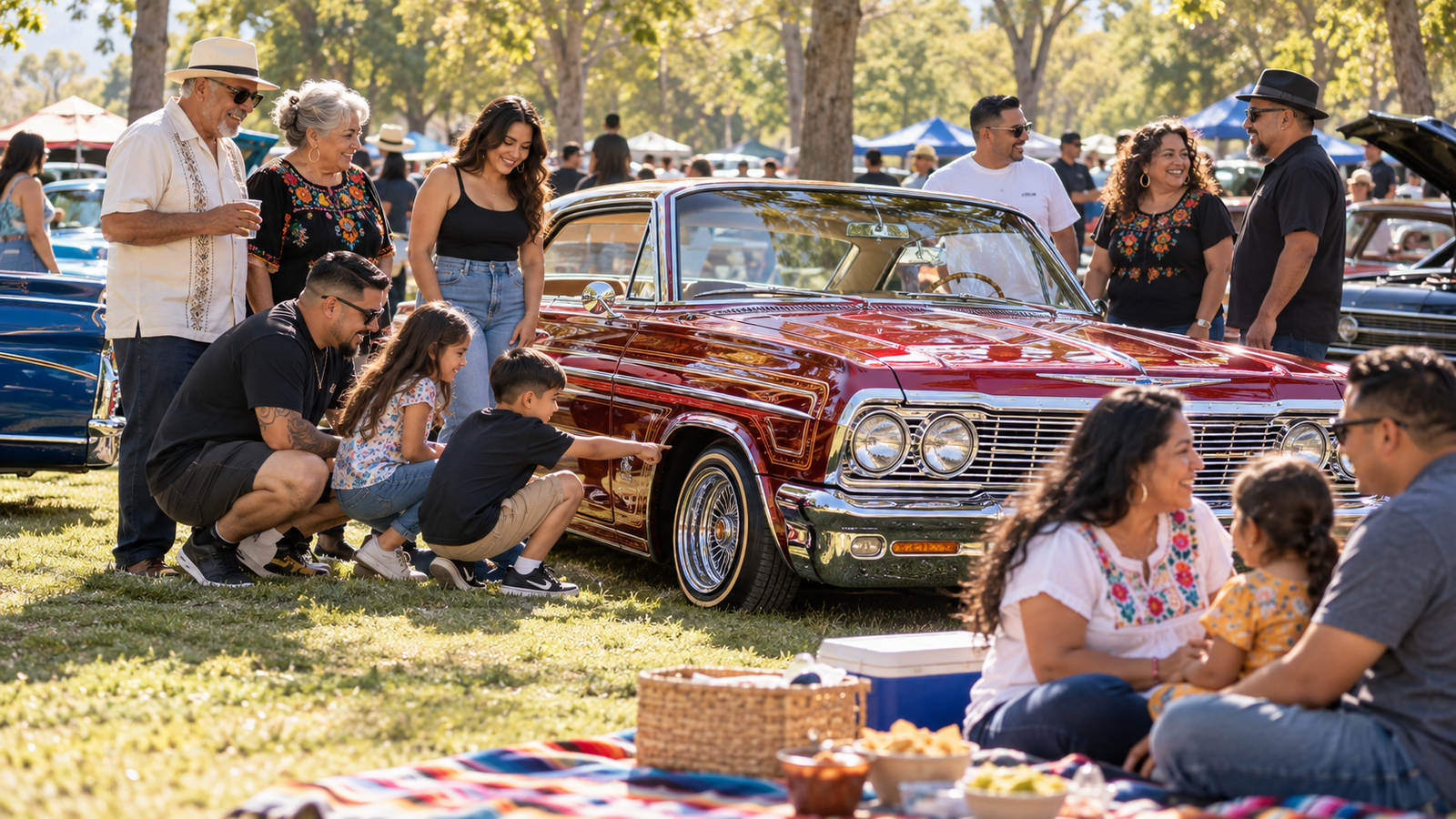
The popular image of lowriding focuses on a car bouncing or rolling slowly down a boulevard. That visual is real, but it is only one part of the story. The deeper culture is often family-centered and multi-generational: grandparents tell the stories, parents organize, younger builders learn the craft, and friends gather around the same vehicles year after year.
The recent San Francisco celebration highlighted exactly that community side. Lowriding can be a way to honor neighborhood history, show artistic skill, and create a public space where people feel seen. It has room for builders, painters, photographers, musicians, and the people who simply show up to appreciate the work.
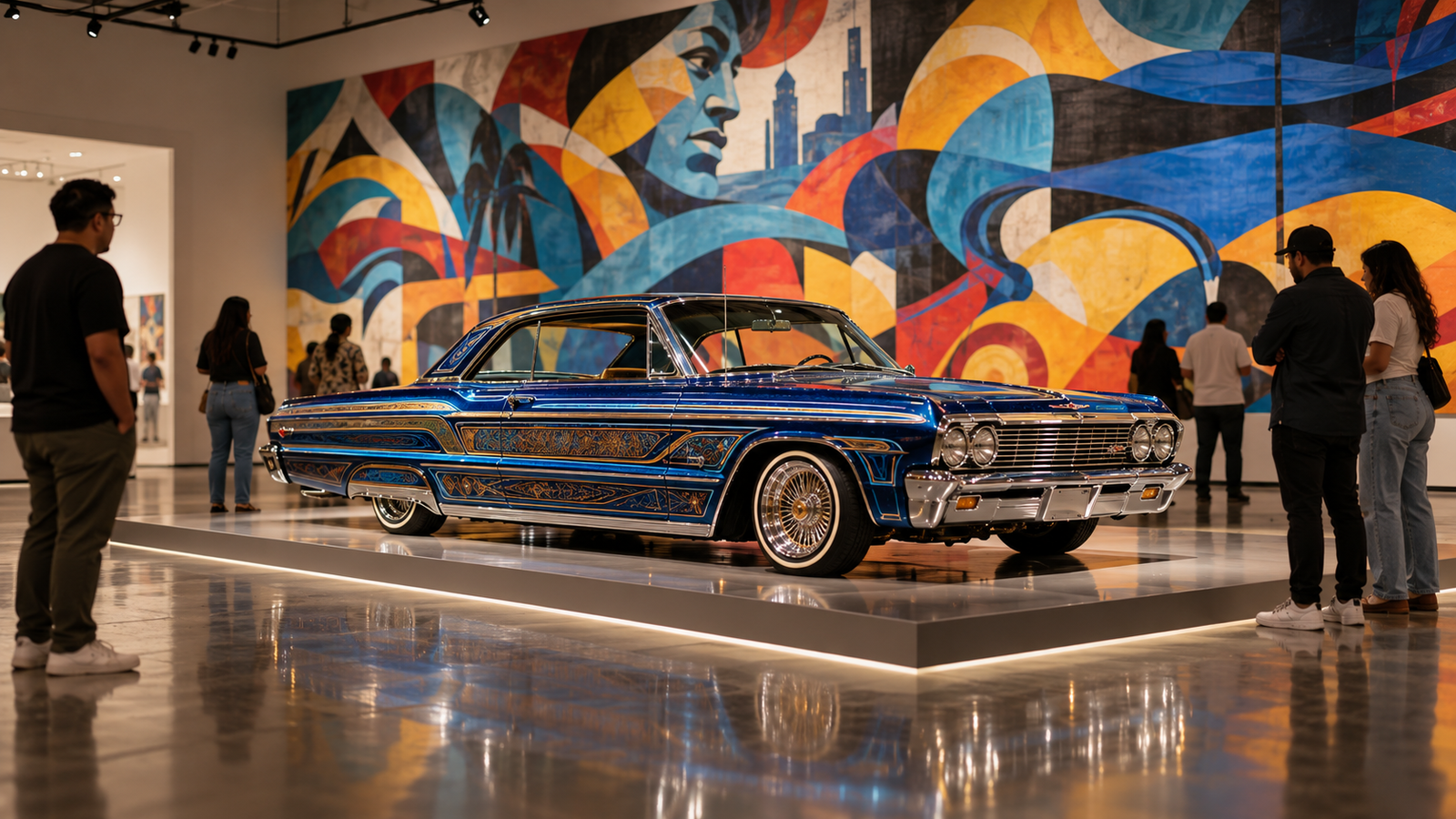
From the boulevard to the museum floor
Museum recognition can sometimes make a living culture feel distant. In this case, it can do the opposite if visitors remember where the work came from. Seeing a lowrider in a gallery should lead people back to the builders, artists, clubs, and communities that made the style matter in the first place.
The best cultural recognition does not flatten a tradition into a decoration. It gives people more context. It helps visitors understand why an intricate paint job, a carefully restored interior, or a slow cruise can carry history and pride—not just visual style.
How to appreciate lowriding with respect
If you attend a public show or cruise, treat the cars as people’s work, not as props. Ask before taking close-up portraits, do not touch a vehicle without permission, and take time to read event information or talk to organizers. Choose official, legal gatherings and support the artists, local vendors, and community groups doing the work.
The new attention around lowriding is a good thing when it brings curiosity, respect, and credit to the people at the center of the culture. The cars are unforgettable. The stories behind them are the reason they matter.