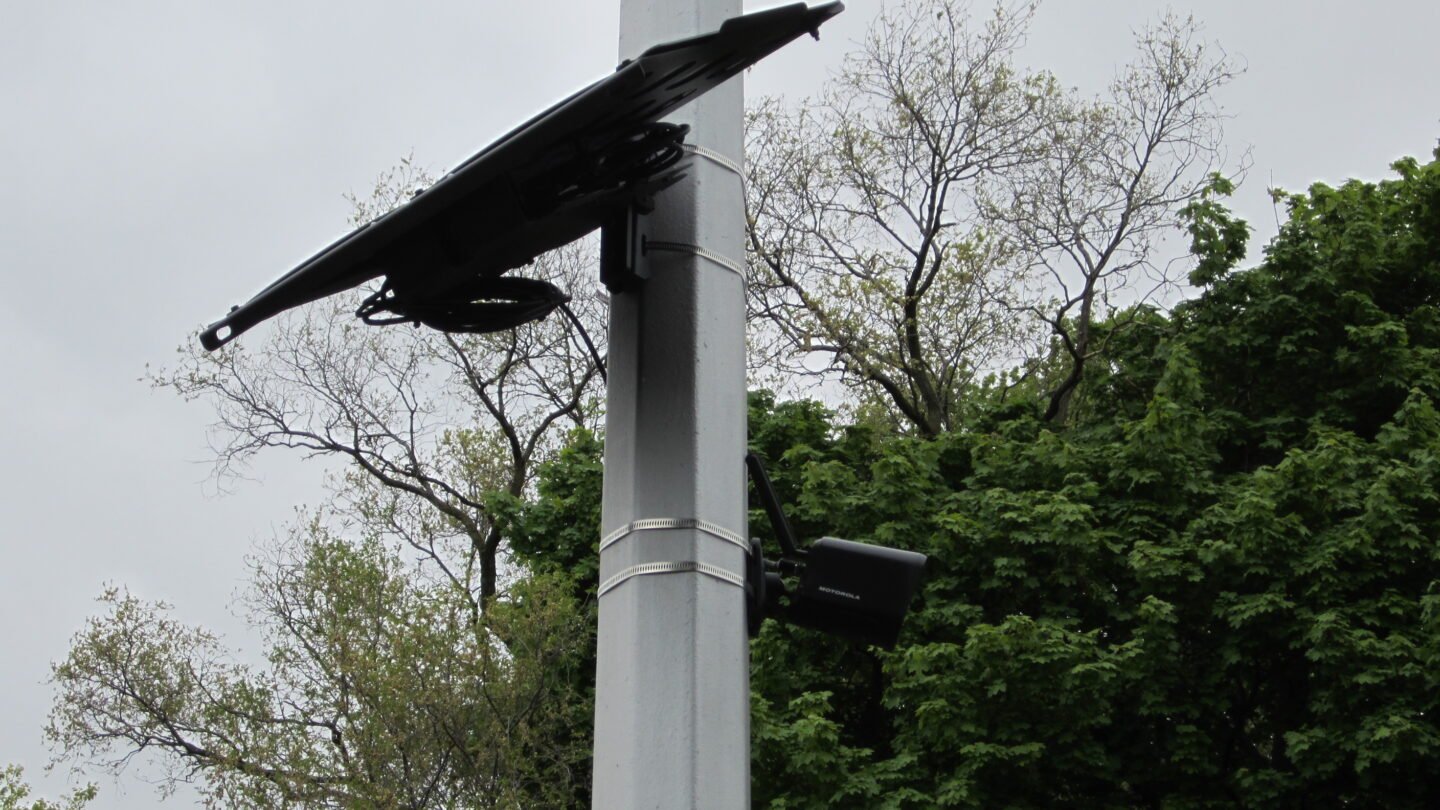
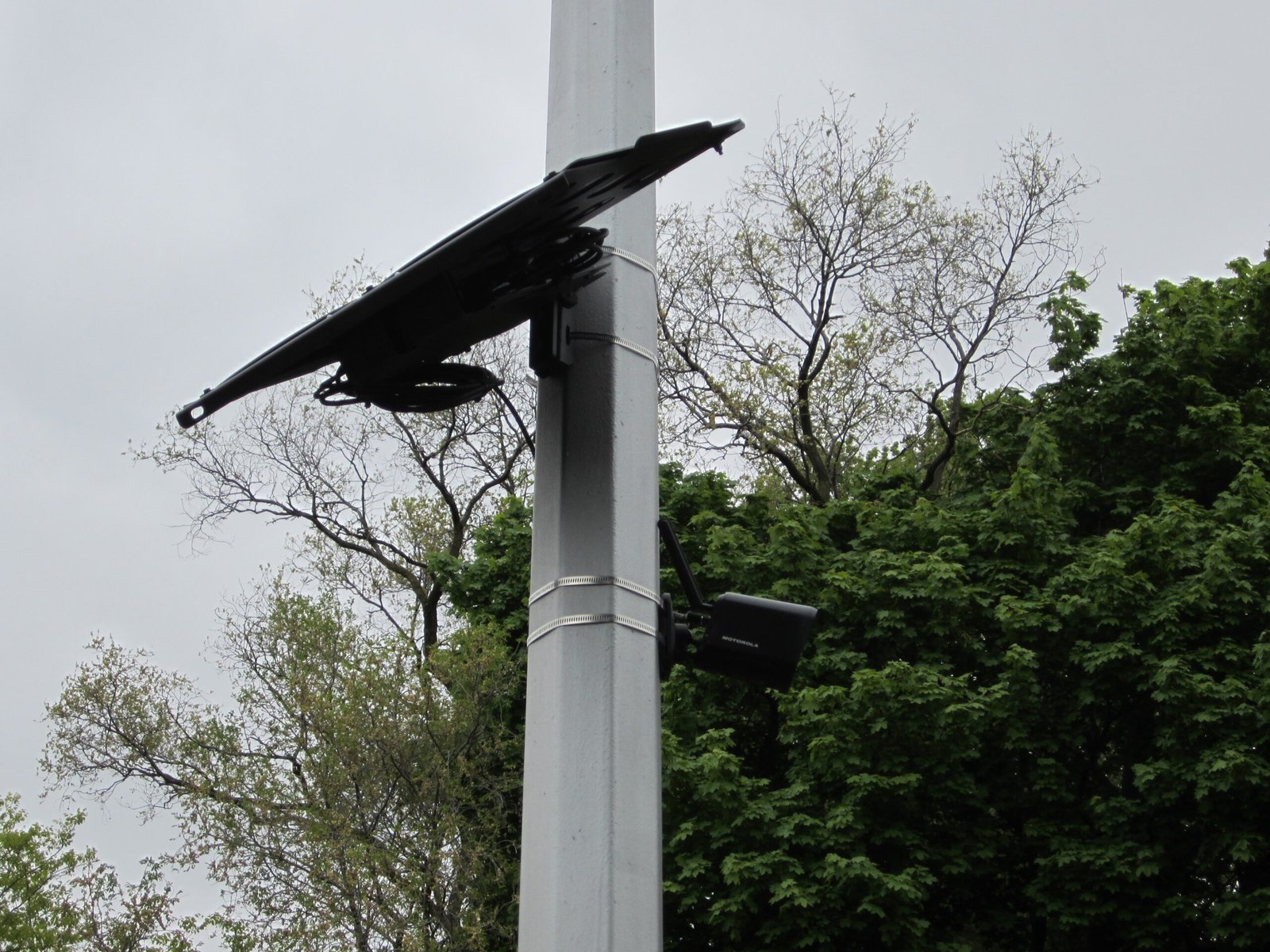
If you drive around Georgia, there is a good chance you have passed one without paying much attention: a small camera mounted on a pole, often paired with a solar panel and pointed toward traffic.
Many of these devices are Flock Safety automated license plate readers, or ALPRs. Police departments use them to identify vehicles connected to stolen-car reports, wanted suspects and active investigations. But in 2026, Flock cameras have also become the center of a much bigger debate in Georgia: how much surveillance is too much?
What does a Flock camera actually do?
A Flock camera is not the same thing as a red-light or speed camera. It is designed to capture vehicle information as cars pass by. Depending on the system, that can include the license plate, time, location, vehicle type, make, model, color and other visible characteristics.
Georgia law defines captured license-plate data broadly. It can include GPS coordinates, date and time, a photograph, the plate number and other data captured or derived from an automated license plate recognition system.
For law enforcement, the attraction is obvious. If officers are looking for a stolen SUV or a car connected to a violent crime, an ALPR network can potentially tell investigators where that vehicle was seen and when.
Why police in Georgia support the technology
Supporters argue that ALPRs can help investigators move much faster than traditional patrol work alone. Georgia Attorney General Chris Carr has defended automated license plate readers as an important crime-fighting tool, pointing to their use in cases involving murders, kidnappings and armed robberies.
That is the strongest argument for the cameras: when they are used correctly, they can help police locate vehicles, develop leads and coordinate across jurisdictions.
So why is Georgia debating them now?
The answer is not the camera itself. It is who can search the data, why they are searching it and how that access is monitored.
Georgia has seen a string of investigations involving alleged misuse of Flock systems by law-enforcement personnel. In July, the Georgia Bureau of Investigation said a Conyers Police Department dispatcher supervisor was accused of accessing the system more than 30 times for non-law-enforcement purposes.
In August, the GBI announced the arrests of four former Savannah Police Department employees after an internal audit. In September, the agency announced additional cases involving a Georgia Department of Corrections special agent in charge, a Clayton County sheriff’s deputy, a former Emerson police officer and a former Colquitt County deputy.
These are allegations and charges, not findings of guilt. But the number of cases has made the privacy question impossible to ignore. On September 23, CBS Atlanta reported that U.S. Sen. Raphael Warnock said at least 20 Georgia law-enforcement officers had been arrested in cases involving misuse of license plate reader systems.
What Georgia law says
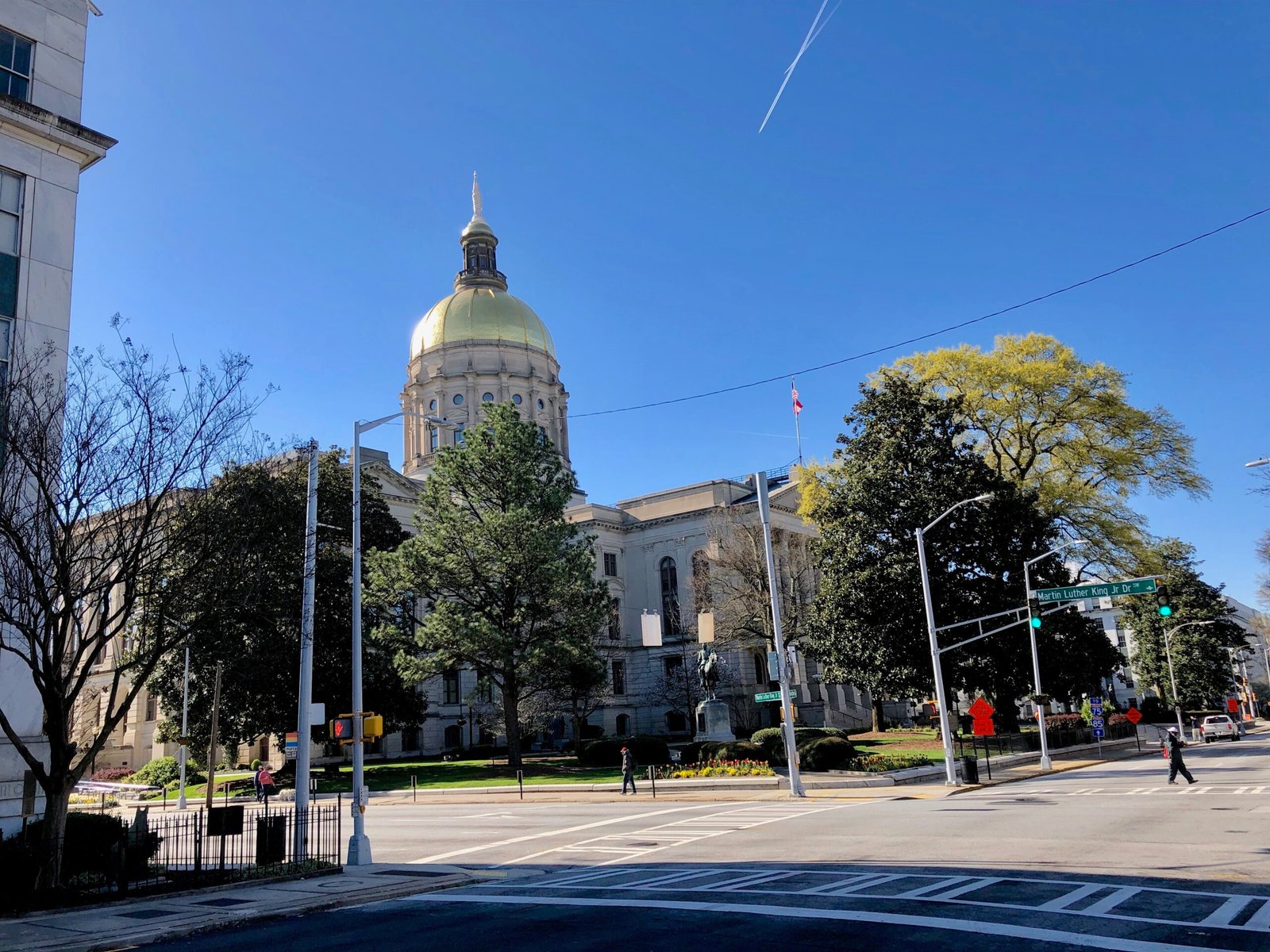
Georgia law allows law-enforcement agencies to collect license-plate reader data, but says that data should not be accessed except for a law-enforcement purpose. The law also requires agencies using ALPR systems to maintain policies covering their use and officer training.
Knowingly obtaining or using law-enforcement license-plate data under false pretenses or for a non-law-enforcement purpose can be prosecuted as a misdemeanor of a high and aggravated nature.
The law also says collected data generally must be destroyed no later than 30 months after collection unless it remains relevant to a toll violation or law-enforcement purpose.
Cobb County and Atlanta are already responding
This debate is especially visible around metro Atlanta. Cobb County police held public town halls in August to explain how officers use Flock cameras and what safeguards are in place. Residents raised questions about both crime fighting and possible abuse.
Atlanta has also moved toward tighter oversight. Mayor Andre Dickens proposed citywide rules for surveillance technology after an Atlanta Police Department audit of 115,578 Flock searches conducted in 2026. According to CBS Atlanta, about 0.07% were flagged for additional investigation to determine whether they violated department policy or training requirements.
APD has also updated its license-plate recognition policy with monthly audits, additional training and tighter restrictions on outside-agency access.
The real question: safety versus privacy?
It is tempting to frame the issue as a simple choice: either support police technology or oppose surveillance. The reality is more complicated.
Flock cameras can help solve serious crimes. At the same time, a searchable system showing where vehicles were seen can reveal sensitive information about ordinary people who are not suspected of any crime.
The better question may be: What safeguards should exist before a government employee is allowed to search that information?
That means strong access controls, regular audits, meaningful penalties for misuse, transparent policies and clear limits on data sharing.
Would you want one near your neighborhood?
Imagine your neighborhood has had a string of car break-ins. A Flock camera at the entrance might help police identify a stolen vehicle quickly. That sounds useful.
But that same system may also record when thousands of completely innocent drivers enter and leave the area.
Would you feel safer, or would you feel watched?
That is the debate Georgia is having right now — and it is likely to become even bigger as lawmakers consider stronger statewide safeguards.