This AI meal plan is a worked example built from a sample pantry. It divides rice, vegetables, chickpeas, and eggs across five dinner ideas for two. The ingredient totals were checked during drafting. Portion sizes and cooking results need to be tried in a kitchen.
The sample groceries
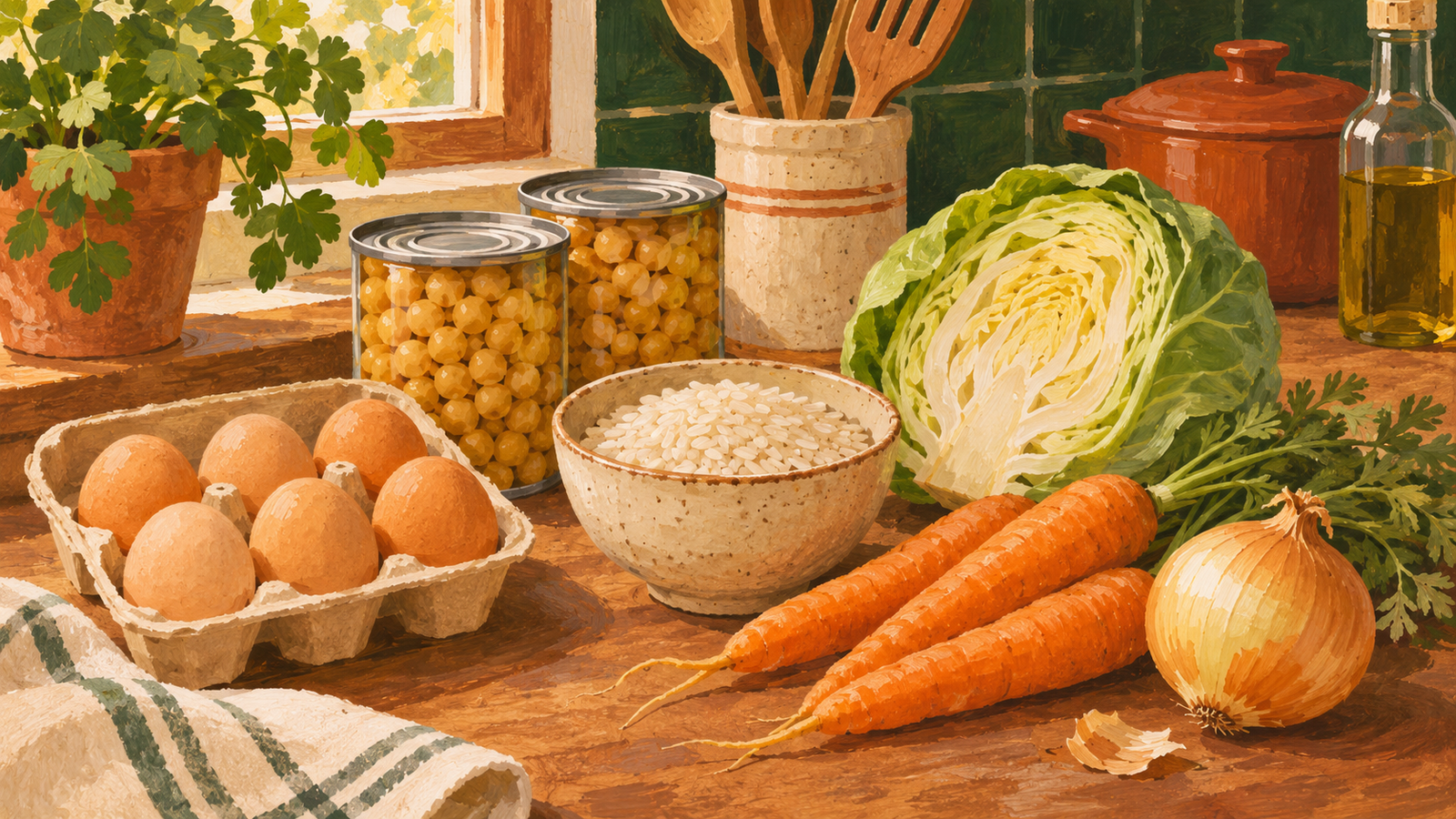
The sample pantry had 2 cups of dry rice, two 15-ounce cans of chickpeas, six eggs, four carrots, one small cabbage, one onion, and one 14.5-ounce can of diced tomatoes. Oil, salt, and basic seasonings were already on hand. The $20 was a spending cap for extras. The revised menu uses the listed groceries, so it calls for no extra purchases.
The prompt you can copy
Plan five weeknight dinners for two using the groceries below. Use up the vegetables, eggs, and opened cans by the last dinner. Keep optional purchases under $20. Show the amount of each ingredient used each night, total those amounts against my list, and flag any shortfalls. Keep dry and cooked rice measurements separate. List only what I still need to buy. My groceries: 2 cups dry rice, two 15-ounce cans chickpeas, 6 eggs, 4 carrots, 1 small cabbage, 1 onion, and one 14.5-ounce can diced tomatoes. I have oil, salt, and basic seasonings.
Five dinners from the same grocery list
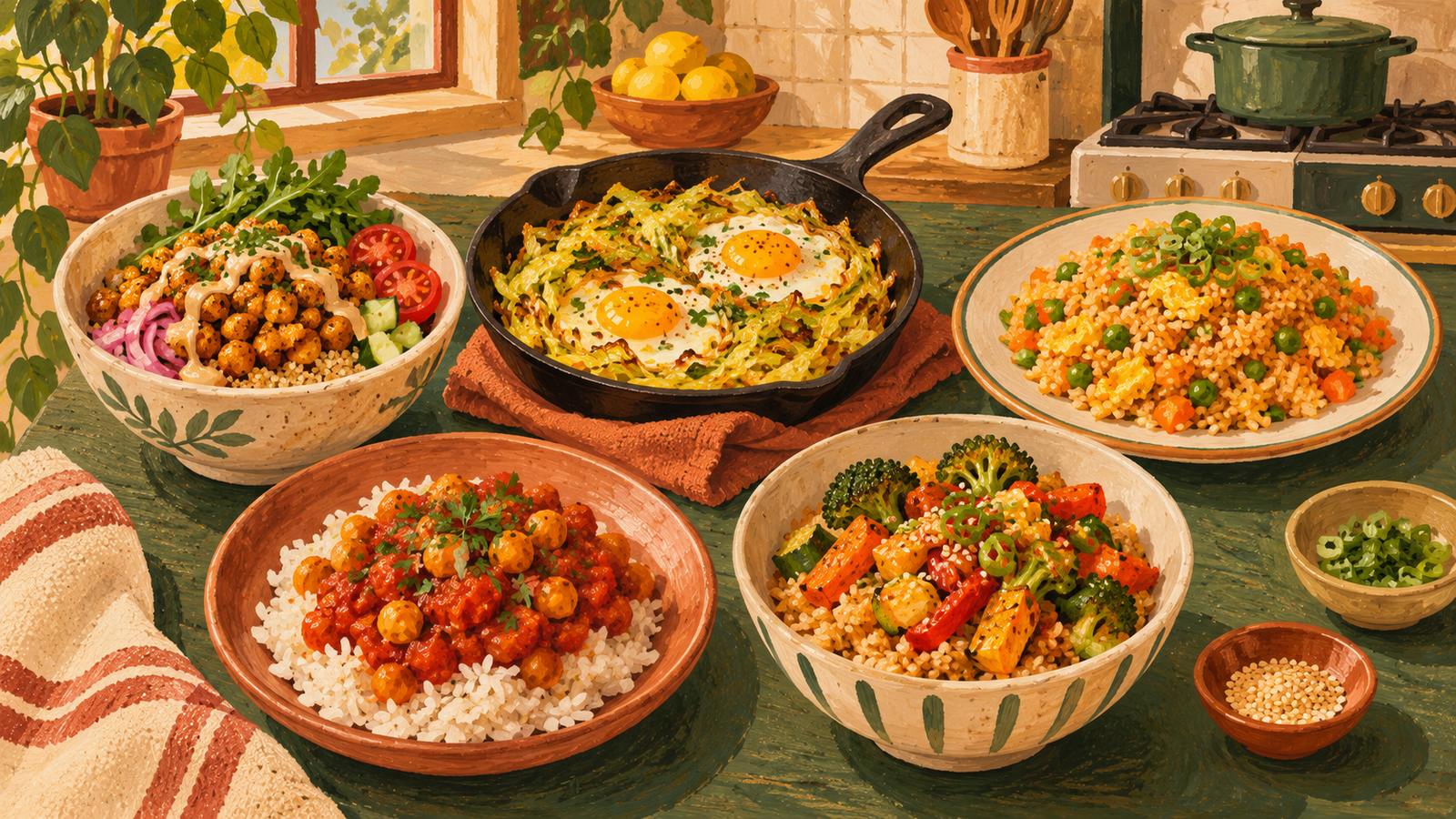
Monday · Chickpea rice bowls. Cook ½ cup dry rice. Add one can of chickpeas, one carrot, and a quarter of the cabbage.
Tuesday · Cabbage and egg skillet. Sauté a quarter of the cabbage, one carrot, and half the onion. Add two eggs. Serve with rice cooked from ½ cup dry.
Wednesday · Carrot and egg fried rice. Use ½ cup dry rice, cooked and cooled enough to fry that evening, plus two eggs, one carrot, and a quarter of the cabbage.
Thursday · Tomato chickpeas. Simmer the second can of chickpeas with the whole can of tomatoes and the other half of the onion. Serve with rice cooked from the final ½ cup dry.
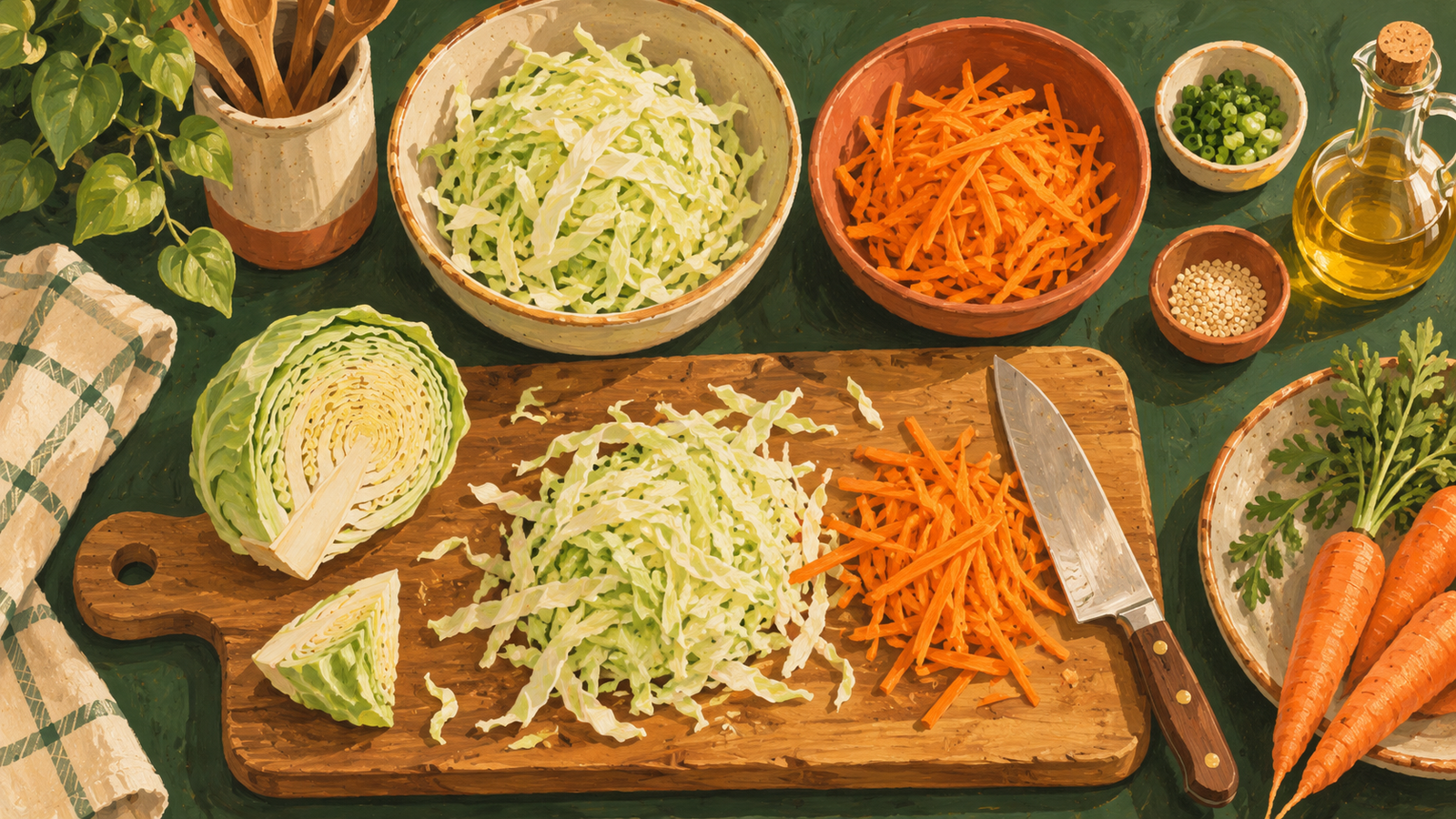
Friday · Cabbage and carrot omelets. Split the last two eggs, one carrot, and the final quarter of the cabbage between two small omelets. This is the lightest dinner. If you want larger portions, add a side and account for it when you set your budget.
Check the AI meal plan against this ingredient ledger
| Ingredient on hand | Allocation | Total used |
|---|---|---|
| 2 cups dry rice | ½ cup each Monday–Thursday | 2 cups dry |
| 2 cans chickpeas | 1 can Monday, 1 Thursday | 2 cans |
| 6 eggs | 2 each Tuesday, Wednesday, Friday | 6 eggs |
| 4 carrots | 1 each Monday, Tuesday, Wednesday, Friday | 4 carrots |
| 1 small cabbage | ¼ each Monday, Tuesday, Wednesday, Friday | 1 cabbage |
| 1 onion | ½ Tuesday, ½ Thursday | 1 onion |
| 1 can diced tomatoes | Whole can Thursday | 1 can |
The meal ideas were easy to reuse, but the ingredient ledger made the plan checkable. Four half-cup portions use all 2 cups of dry rice. Three dinners use two eggs each, so all six are spoken for. The four cabbage portions use one head, and the carrots go into four meals. Each can gets used in one dinner, which avoids half-open cans.
Use the ledger as a starting point for your own AI meal plan. Enter the amounts you actually have, then total every ingredient across all five meals. For this example, the egg meals provide one egg per diner. Friday has no rice or chickpeas, so choose a side or a larger egg portion if that suits your appetite, and add it to your shopping list.


