Chattahoochee Nature Center gives a Roswell day out a simple focus: follow your curiosity from wildlife exhibits to woodland paths and river views. It is a useful option for families who want outdoor time with opportunities to stop, look closely, and learn along the way.
Our suggestion for a first visit is to choose a few highlights rather than attempt every trail. Start indoors, spend time on the Wildlife Walk, and make the river boardwalk your main walk if conditions and your group’s needs allow. This guide covers the practical details and a flexible half-day plan.
Chattahoochee Nature Center tickets, hours, and parking
| Detail | Published visitor information |
|---|---|
| Address | 9135 Willeo Road, Roswell, GA 30075 |
| Monday–Saturday | 10 a.m.–5 p.m. |
| Sunday | Noon–5 p.m. |
| Adult admission | $20 |
| Seniors 65+ and students ages 13–18 | $16 |
| Children ages 3–12 | $14 |
| Children 2 and under | Free |
| Parking | Free for visitors |
| Phone | 770-992-2055 |
These details come from the official visitor page, checked October 1, 2026. Check its calendar for closures and seasonal changes. Arrivals after 4:30 p.m. can browse the upper Discovery Center level but should return another day for the grounds and exhibits.
Current construction note: the center reports work in portions of its grounds and parking areas, while remaining open with visitor experiences available. Follow onsite directions.
A family admission example
Two adults and two children ages 3–12 total $68 at the listed general-admission rates, before any checkout charges or extras. Budget separately for special programs and purchases. Confirm the final amount through the official ticket link before paying.
Start with the Discovery Center
The experience overview describes interactive exhibits, live animals, and the Nature Exchange as ways to explore the river and its watershed. The surrounding native gardens also connect plants with the wildlife they support.
Beginning here gives the outdoor part of your visit a purpose. Ask everyone to choose one question to carry onto the trail: Where does water collect? What makes a good animal shelter? How does a pond differ from a flowing river?
You do not need to turn the outing into a lesson at every stop. Let a display or an unexpected observation start the conversation. If children want to linger at one exhibit, shorten the walk later rather than rushing them through something that holds their interest.
Which trails should you choose?
The official trail guide lists about 2.5 miles of trails across the 127-acre property. These individual route lengths can help you choose a starting point:
| Route | Listed distance | What to know |
|---|---|---|
| Wildlife Walk | 0.32 miles | Paved beginner route with wildlife exhibits |
| Beaver Pond Trail | 0.16 miles | Short beginner trail through pond and forest habitat |
| Kingfisher Pond Trail | 0.26 miles | Beginner route with pond and forest views |
| River Boardwalk Trail | 0.5 miles | Beginner, ADA-compliant route with river and wetland views |
| Forest Trail | 0.31 miles | Intermediate; the property’s steepest trail |
These are individual trail distances, not the total distance from your car or between every stop. Use the onsite map and ask staff about current routes before combining them.
Our first-visit route
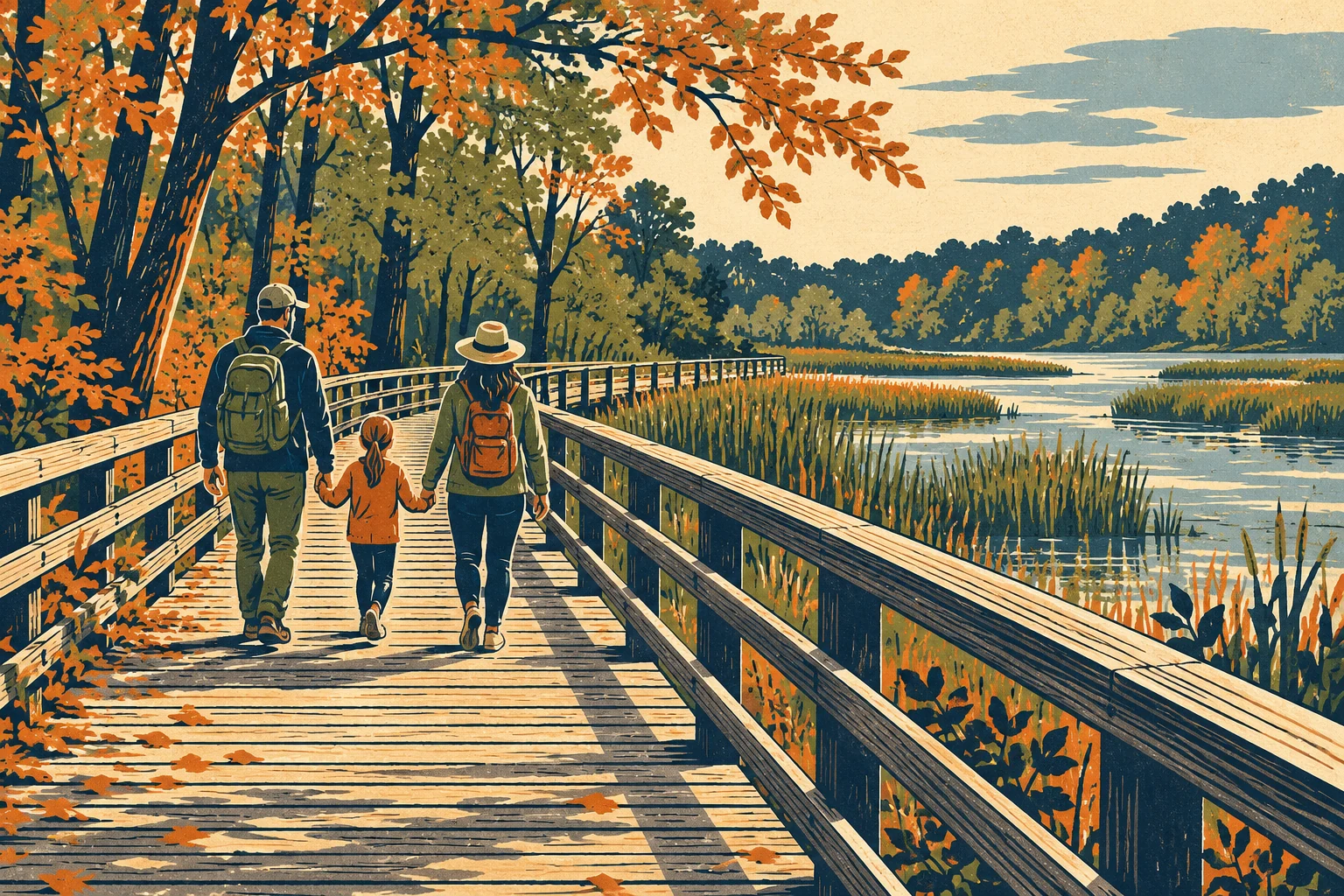
Choose the Wildlife Walk and River Boardwalk as your priorities, then decide whether to add a short pond trail. If your group prefers less walking, spend more time at the exhibits and select just one outdoor route.
Give yourself permission to turn a short trail into a slow visit. A few minutes of quiet observation can reveal more than covering another stretch of path while everyone is tired or distracted.
Wildlife: look closely without expecting a checklist
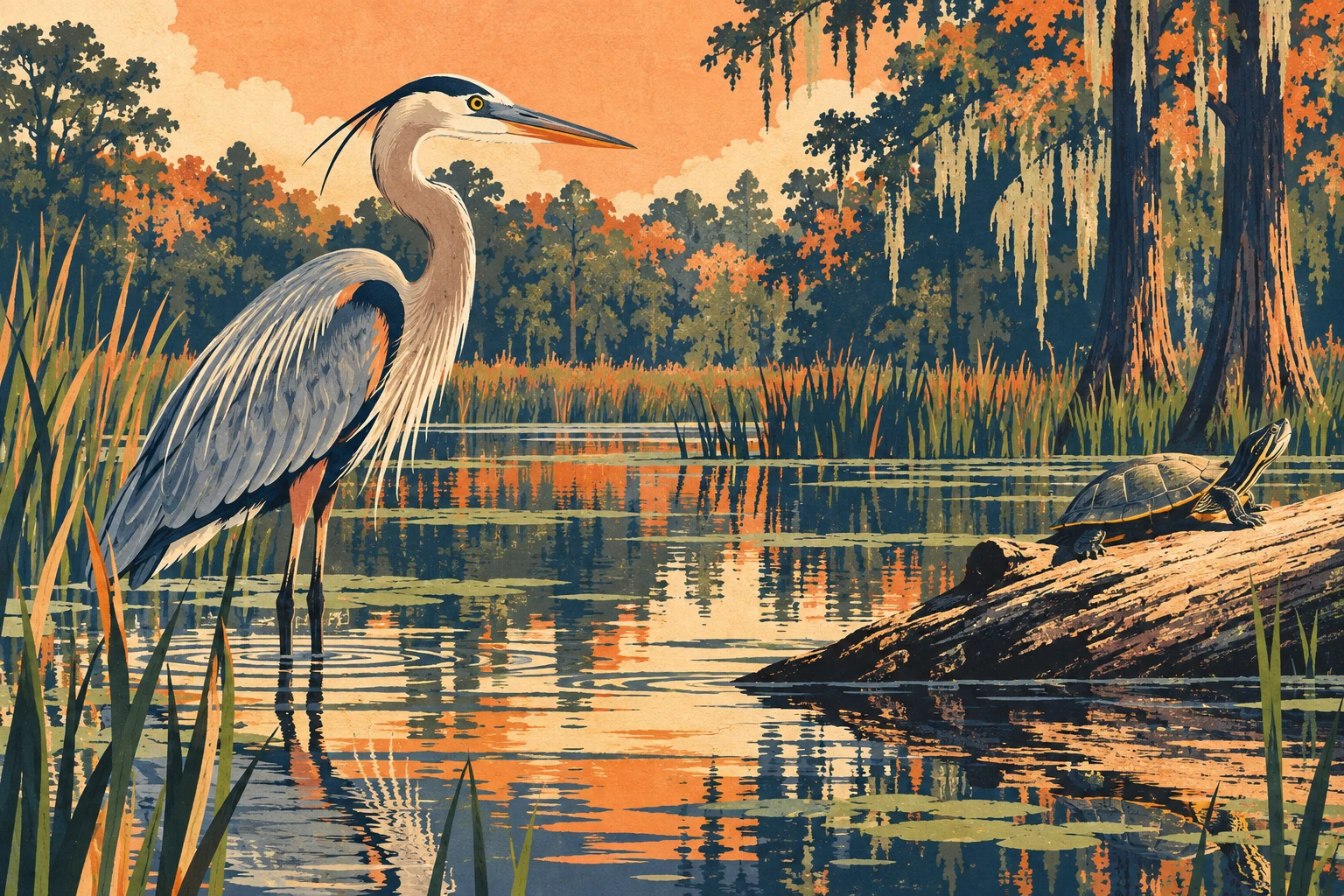
The official trail descriptions highlight birds of prey in aviaries along the Wildlife Walk and possible sightings such as herons and turtles around pond habitats. Seasonal conditions affect what visitors see, so no particular wild-animal sighting should be assumed.
For children, try an observation game that works even on a quiet wildlife day: notice a movement, listen for a sound, and find a place an animal might hide. Compare observations afterward rather than competing to spot the most animals.
Accessibility and stroller planning
The official FAQ identifies paved paths as smoother options. It describes Beaver Pond and Kingfisher Pond as the most stroller-friendly forest trails, while noting hills and exposed roots. A limited number of wheelchairs and strollers are available to borrow from Admissions.
For a specific mobility need, call ahead instead of assuming every route will work equally well. Ask about the path from parking, construction detours, and the conditions on your intended route. Borrowed equipment is limited, so discuss availability if your visit depends on it.
A relaxed half-day itinerary
The center recommends allowing at least two hours, with additional time for a picnic or program. Our suggested sequence leaves room to adjust:
- Check in and get oriented. Ask about current trail conditions and any activities that suit your group.
- Explore the Discovery Center. Let each person choose one exhibit or question to investigate.
- Visit the Wildlife Walk. Pause at the displays that interest you rather than moving at a fixed pace.
- Take a break. Reassess energy before committing to another walk.
- Choose the boardwalk or a short trail. Finish while the outing still feels enjoyable.
From Kennesaw or elsewhere in metro Atlanta, check live traffic before leaving. Use the full Willeo Road address and avoid attaching a tightly timed lunch reservation to an unfamiliar walking itinerary.
Food, packing, and family basics
The FAQ permits visitors to bring food and lists uncovered picnic areas available first come, first served. Snacks are sold in the Nature Store. For a simple visit, pack water, a modest picnic, and a bag for carrying your belongings comfortably.
Our practical additions are walking shoes, weather-appropriate layers, a charged phone, and any personal essentials. Keep the load light enough that one adult is not carrying several awkward bags between stops.
The visitor rules require an adult to accompany children under 16. Pets are not permitted; service animals are welcome. Check the visitor page before bringing equipment or planning around a special activity.
More ideas for a Roswell day out
If you would rather eat after exploring, our The Freakin Incan guide introduces a Peruvian restaurant elsewhere in Roswell. Check its hours and the drive between locations before combining the two.
For another outdoor day, browse Gibbs Gardens in fall. If your next outing needs more indoor time, see our Tellus Science Museum guide.
Visitor details checked October 1, 2026, against official sources linked above. Rates, conditions, and schedules can change. This is a researched planning guide, not a firsthand visit report. Images are AI-generated conceptual illustrations, not documentary photographs of Chattahoochee Nature Center.