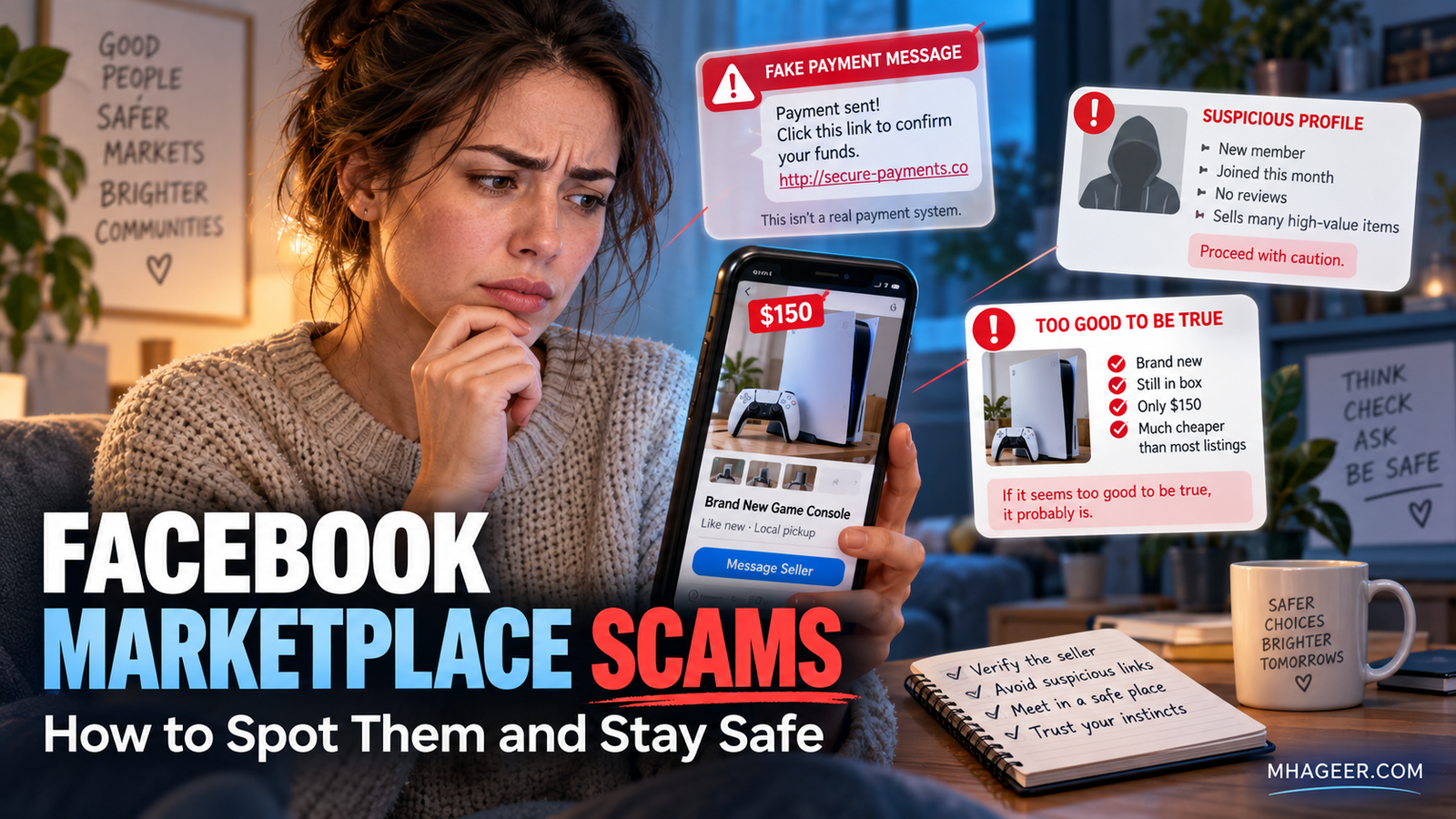
Facebook Marketplace can be a great place to find furniture, electronics, cars, and household items at affordable prices. It is also an easy way to turn things you no longer need into extra cash.
Unfortunately, scammers use the same platform to advertise products they do not own, send fake payment confirmations, steal accounts, and pressure people into sending deposits.
The good news is that most Marketplace scams follow recognizable patterns. Learning those patterns can help you protect your money, personal information, and safety.
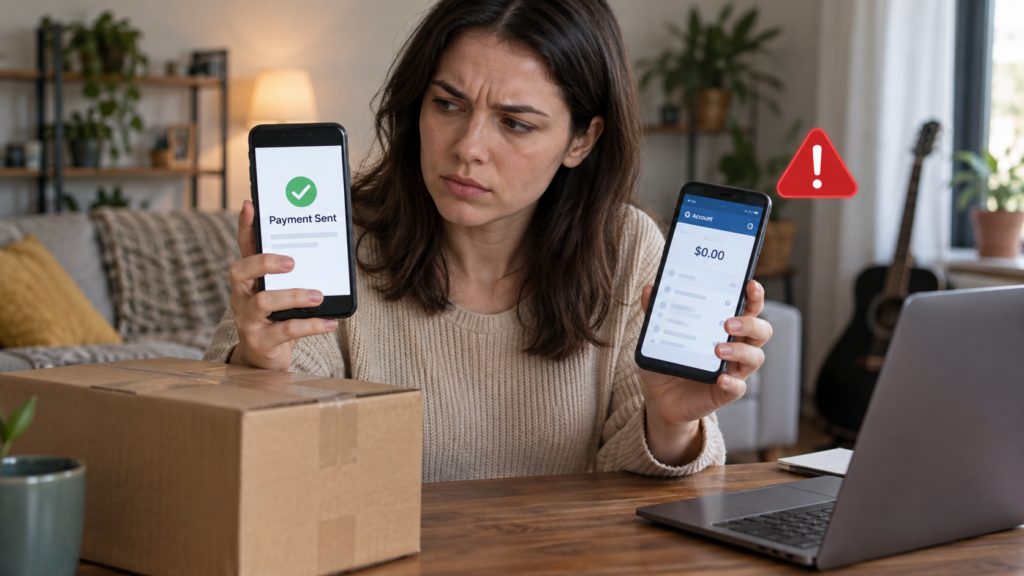
Generated editorial illustration: a seller checks the actual account instead of trusting a payment message.
1. The Fake Payment Confirmation
A buyer agrees to your price without asking many questions. A few minutes later, they send a screenshot or email claiming the payment was completed.
There is only one problem: no money appears in your account.
The scammer may say the payment is “pending” until you provide a tracking number, pay an account-upgrade fee, or refund an accidental overpayment. The message may look convincing, but screenshots and emails can be forged.
Never release or ship an item based on a message alone. Open your bank or payment app independently and confirm that the money is available. Do not use links supplied by the buyer.
2. The Verification-Code Trick
Someone interested in your listing asks for your phone number. They then claim they need to verify that you are a real seller.
A six-digit code arrives on your phone, and the buyer asks you to send it to them.
Stop immediately. That code may be part of an attempt to access your social-media, email, payment, or telephone account. Legitimate buyers do not need your private security code to purchase a sofa or television.
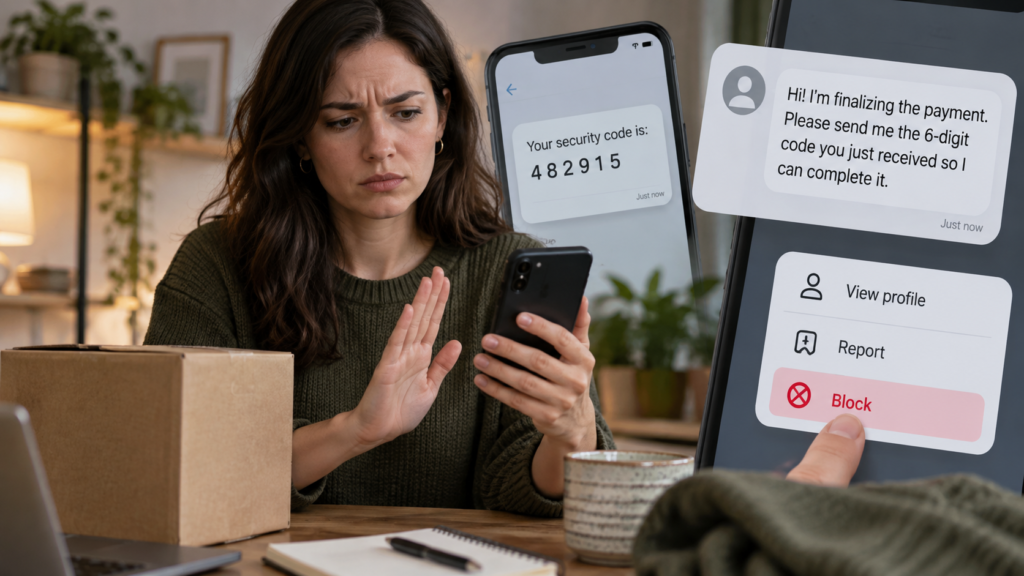
Generated editorial illustration: never share a login or verification code with a Marketplace buyer.
Treat every verification code like a password. Do not read it aloud, photograph it, or paste it into a conversation.
3. Prices That Make No Sense
A nearly new game console, phone, laptop, or designer item appears for a tiny fraction of its normal value. The seller explains that they are moving, need money immediately, or received two of the same product.
Occasionally, people do offer excellent deals. However, an unbelievable price combined with urgency, a new profile, copied photographs, and a deposit request is a major warning.
Search for similar products to understand the normal price. You can also perform a reverse-image search to see whether the seller copied the photographs from another listing or website.
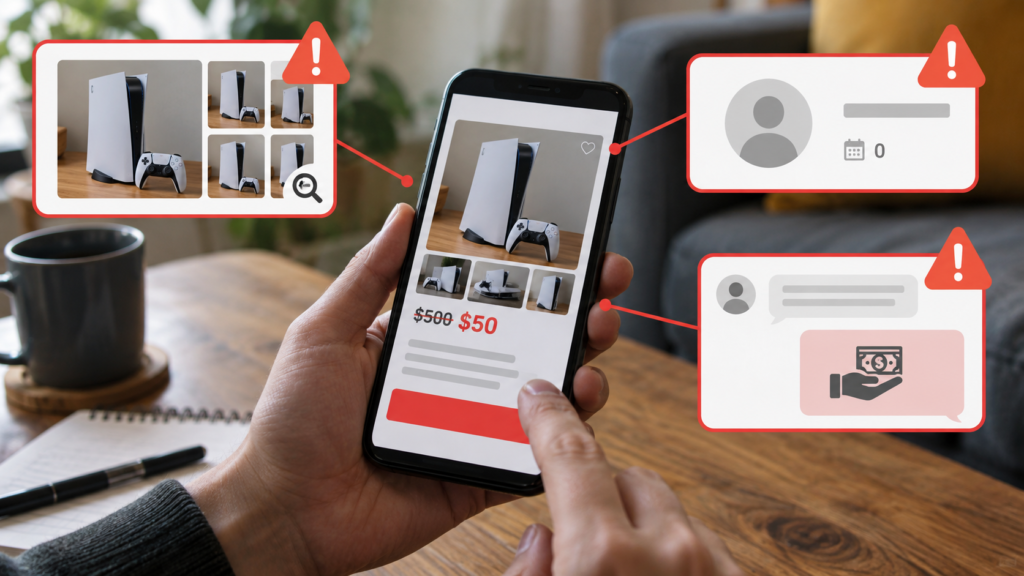
Generated editorial illustration: a low price, duplicate photos, empty profile, and deposit demand can signal a fake listing.
Ask the seller to provide a new photograph showing the item beside a handwritten note with the current date. It is not a perfect test, but a scammer using stolen pictures may refuse.
4. Requests for a Deposit Before You See the Item
The seller says several other people are interested and demands a deposit to reserve the item. After you send the money, the listing and seller disappear.
This scheme is especially common with vehicles, electronics, rental properties, event tickets, and other high-demand listings.
Avoid deposits when dealing with an unfamiliar local seller. Inspect the item first, confirm that the person actually possesses it, and test it before paying. If a seller creates pressure by saying, “Pay within five minutes or it is gone,” be prepared to let it go.
Losing a great deal is disappointing. Losing your money and receiving nothing is worse.
5. Moving the Conversation Away From Facebook
A scammer may quickly ask to continue through text, email, WhatsApp, or another service. That can make it harder for the platform to review the complete conversation.
Keep early communication inside Messenger. Do not click unfamiliar payment, shipping, or account-verification links.
Meta advises users who suspect a Marketplace scam to stop communicating and report the buyer, seller, or listing. Its official guidance explains common Marketplace scams and provides instructions for reporting a Marketplace scam.
6. The Overpayment and Refund Scam
A buyer claims to have accidentally paid more than the asking price. They ask you to return the difference immediately.
The original payment may be fake, made with a stolen account, or later reversed. The “refund” you send comes from your real money.
The Federal Trade Commission warns that scammers may send fraudulent checks or payments and then ask the victim to return part of the money. It recommends refusing unusual payment demands and never depositing a check and sending money back. FTC scam-prevention guidance
7. Unsafe Meetings
For local purchases, meet during daylight in a busy public location. Many police departments provide monitored exchange areas specifically for online transactions.
Bring another adult, tell someone where you are going, and avoid inviting strangers into your home whenever possible. If the item is too large to move, keep it near the garage or entrance and have someone with you.
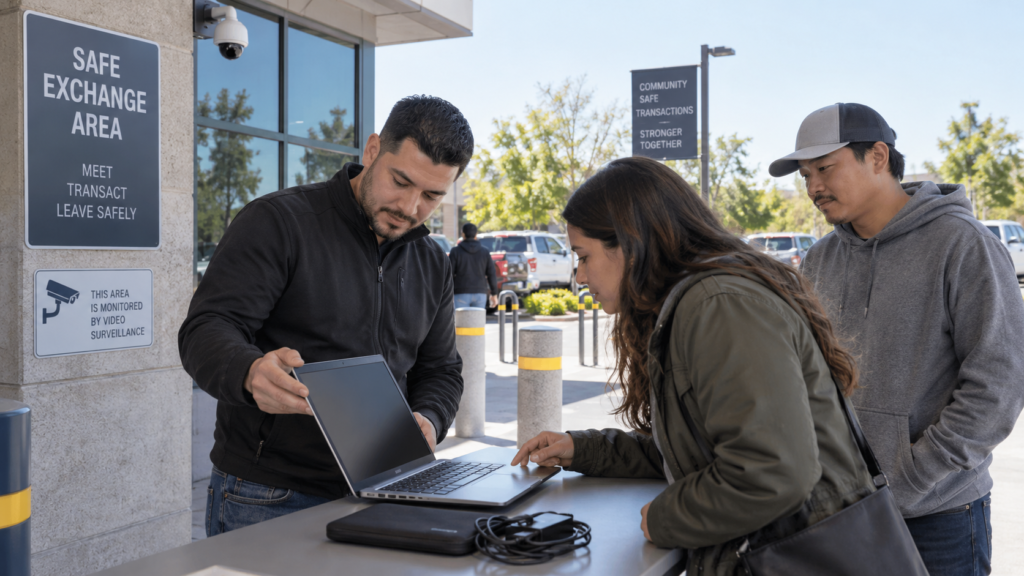
Generated editorial illustration: inspect local purchases in a busy, monitored location when possible.
Test electronics before paying. Confirm that phones are not activation-locked, check serial numbers on valuable equipment, and make sure the item matches the listing.
Your safety matters more than completing the sale. Leave if the location changes unexpectedly or the other person’s behavior feels threatening.
8. Empty or Suspicious Profiles
A new profile is not automatic proof of fraud. Still, look carefully when several warning signs appear together:
- The account was created recently.
- The profile has little normal activity.
- The location does not match the listing.
- The seller has many expensive products at unusually low prices.
- The person refuses video calls or current photographs.
- Their messages sound copied or do not answer direct questions.
Older accounts can also be hacked, so account age alone does not guarantee trustworthiness.
What to Do If You Were Scammed
Contact your bank, card issuer, or payment service immediately. Ask whether the transaction can be stopped, disputed, or recalled.
Preserve screenshots of the listing, profile, conversation, payment records, phone numbers, email addresses, and receipts. Report the account and listing through Facebook, then submit a report to the FTC at ReportFraud.ftc.gov. Internet-enabled financial crimes can also be reported through the FBI’s official Internet Crime Complaint Center.
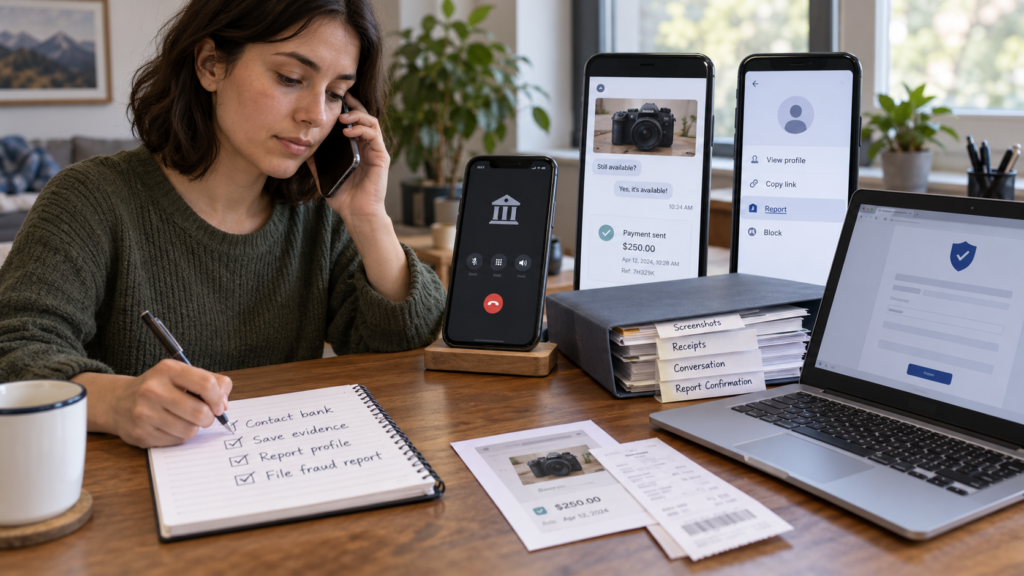
Generated editorial illustration: contact the payment provider, save evidence, and report the account.
Change compromised passwords and enable two-factor authentication if you shared a code, password, or login information.
Final Take
Facebook Marketplace can still be useful when you slow the transaction down.
Inspect the item, verify payments inside your actual account, keep private codes secret, and meet in a safe public place. Walk away when someone demands an immediate deposit, sends a suspicious link, or creates a complicated payment story.
A real buyer or seller should understand reasonable safety precautions. A scammer usually wants you to ignore them.