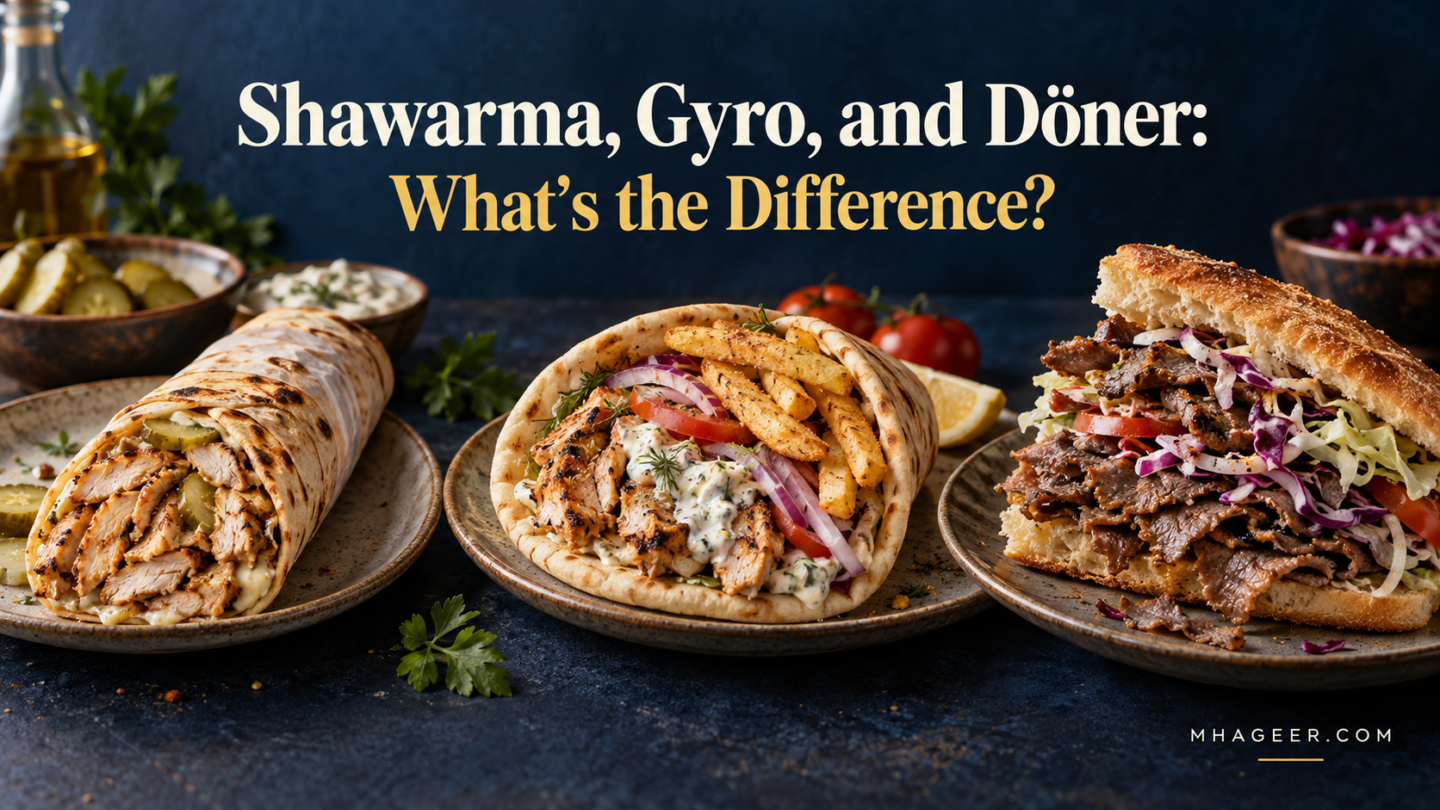
You are staring at a menu. One option says shawarma, another says gyro, and somewhere nearby a döner sandwich is looking extremely convincing.
All three promise seasoned meat, warm bread, and a meal that probably requires extra napkins. So, are they basically the same thing?
Not quite. They belong to a related family of foods, but regional traditions, seasonings, sauces, and serving styles give each its own personality. Here is how to tell them apart—and choose your next delicious lunch.
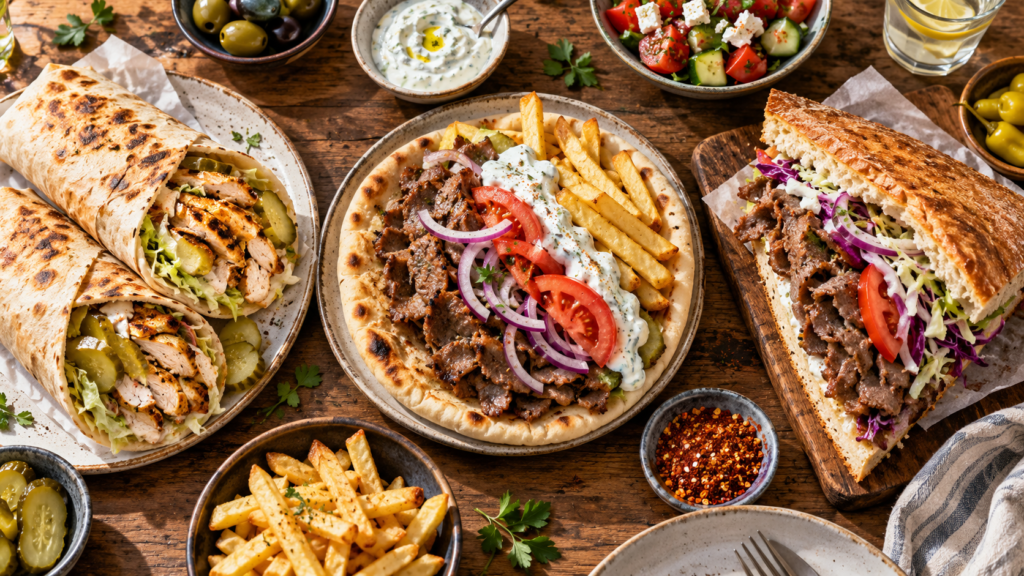
AI-generated food illustration showing representative versions; ingredients and presentation vary.
The Connection: Meat That Keeps Turning
The classic restaurant versions share a familiar sight: seasoned meat rotating vertically beside a heat source. The browned exterior is shaved away in thin slices as the next layer cooks.
Turkish döner belongs to this cooking tradition, which also connects with Greek gyros and Middle Eastern shawarma. The name döner comes from a Turkish word meaning “turning.” But the shared technique does not make the finished dishes interchangeable. Döner kebab background
Think of them as culinary relatives with different ideas about what makes a perfect sandwich.
Shawarma: Follow the Spices
Shawarma is associated with Middle Eastern cooking and can feature chicken, lamb, beef, or other meats, depending on the region and restaurant.
Its seasoning is a major part of the appeal. For an approachable example, RecipeTin Eats’ chicken shawarma combines cumin, coriander, cardamom, paprika, garlic, and lemon. That particular recipe is a home-cooking adaptation—not a universal formula for every shawarma shop. Chicken shawarma ingredients and background
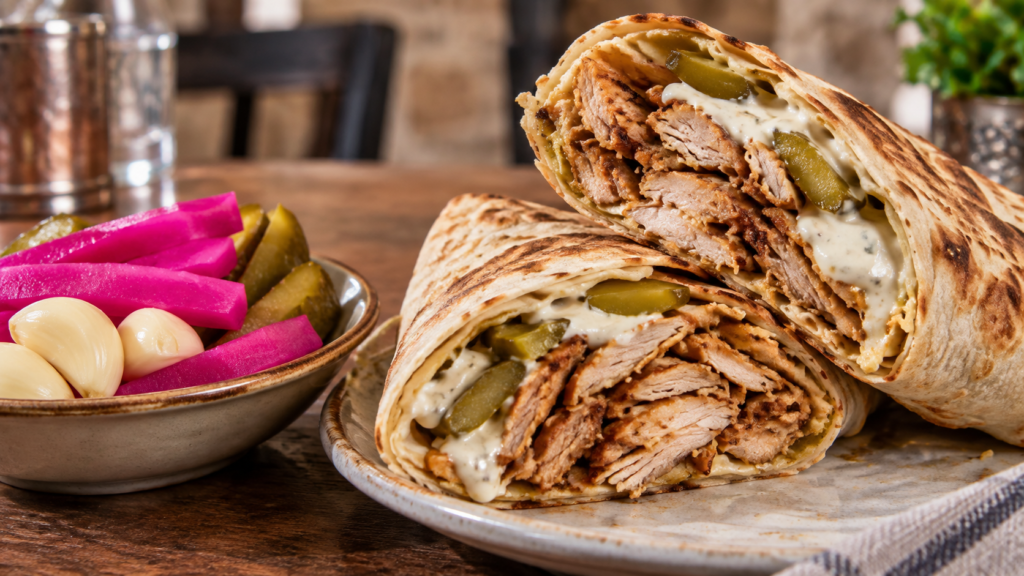
AI-generated illustration of a chicken shawarma wrap with pickles and garlic-style sauce.
You might encounter shawarma in a rolled flatbread or served as a plate with sides. The bread, vegetables, and sauces can change the experience considerably.
When ordering, ask which sauce comes with your chosen meat. A creamy sauce, sharp pickles, or an extra drizzle of chili sauce can each take the meal in a different direction.
And remember: well-spiced does not automatically mean chili-hot. Ask about heat rather than letting the word “spiced” scare you away.
Gyro: Warm Pita Meets Cool Tzatziki
Greek gyros commonly use pork or chicken. In Athens, familiar sandwich companions include tomato, onion, and tzatziki, although regional preferences differ—even within Greece. Le Monde’s look at Greek street food
A chicken gyro can lean toward garlic, lemon, and oregano flavors. Tzatziki brings a cooling yogurt-and-cucumber contrast, as illustrated by this Greek chicken gyro recipe.
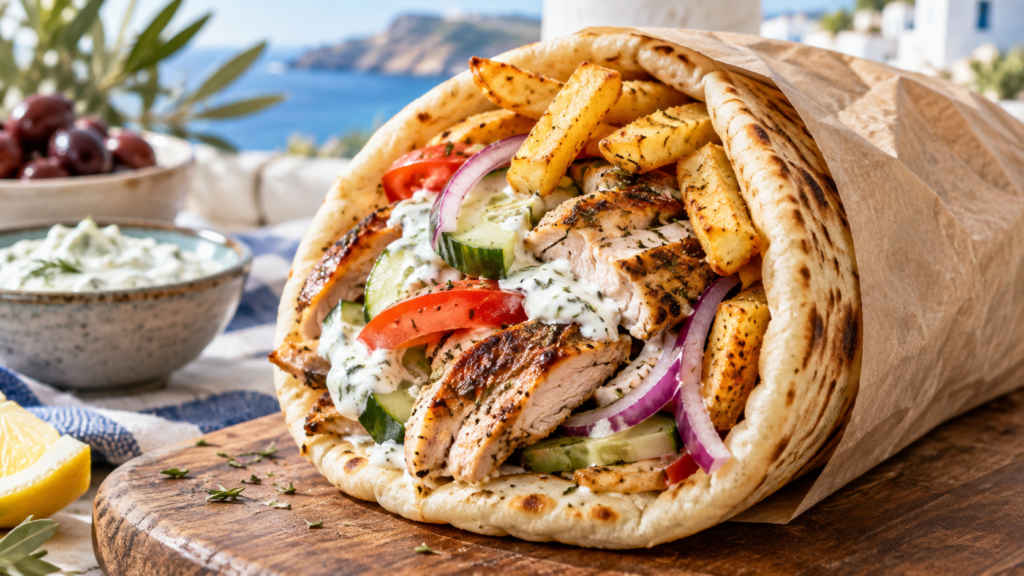
AI-generated illustration of a chicken gyro in folded pita.
If creamy sauces and fresh vegetables sound more appealing than extra chili heat, a gyro with tzatziki is a sensible starting point.
Check the meat description before ordering, though. “Gyro” alone does not tell you exactly what a particular restaurant serves. Ask whether the filling is chicken, pork, or another meat or blend.
The picture on the menu is helpful. The person preparing your sandwich is better.
Döner: More Than One Kind of Sandwich
Döner has Turkish roots, but it appears in several forms. It can arrive on a plate, inside bread, or wrapped in thin flatbread as a dürüm.
The generously filled German-style döner sandwich is another recognizable version, shaped by Turkish immigrant food culture. Salad, cabbage, tomato, and sauces often accompany the sliced meat. That style should not be mistaken for the only way döner is served. Döner styles and regional variations
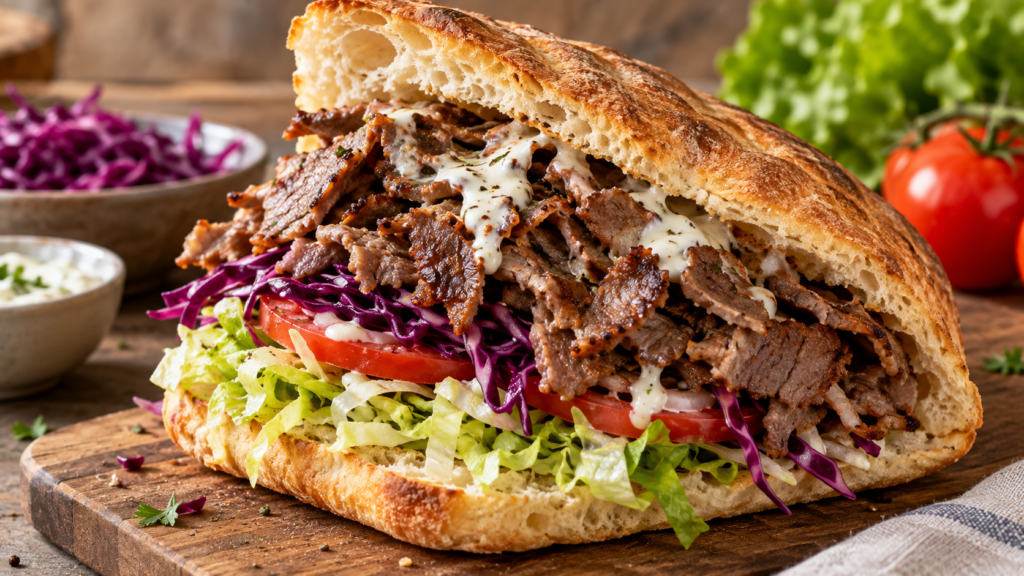
AI-generated illustration of a German-style beef döner sandwich.
Order a bread-filled version when you want plenty of crunch and a substantial handheld meal. Choose a wrap if you prefer less bulky bread, or a plate if you want to taste the components separately.
None of these options eliminates the need for napkins. That part is universal.
Four Questions That Make Ordering Easier
Instead of choosing only by the dish’s name, ask:
- Which meat do you use? Confirm the actual filling rather than assuming.
- What comes inside? Ask about vegetables, pickles, fries, and bread.
- Which sauces are included? Request them on the side if you want to compare flavors.
- Can you confirm my dietary requirements? Do not assume a dish is halal or suitable for an allergy because of its name or cuisine.
These questions are useful whether you are exploring a new restaurant around Atlanta or ordering from your neighborhood takeout spot.
Turn Lunch Into a Taste Test
Go with two friends, order one of each, and divide them into tasting portions. Compare the meat first, then the bread, then a complete bite with sauce and vegetables.
Notice what you actually enjoy: toasted edges, soft pita, tangy pickles, cooling sauce, or a generous pile of crunchy salad.
There does not need to be one winner. You may discover that shawarma is your weekday favorite, gyros suit your lunch mood, and döner deserves an entire weekend appetite.
That is not indecision. That is a well-rounded research program.