The caller sounds exactly like your son, daughter, spouse, or manager. They are frightened, something terrible has happened, and they need money immediately.
Your first instinct is to help. That emotional reaction is exactly what the scammer wants.
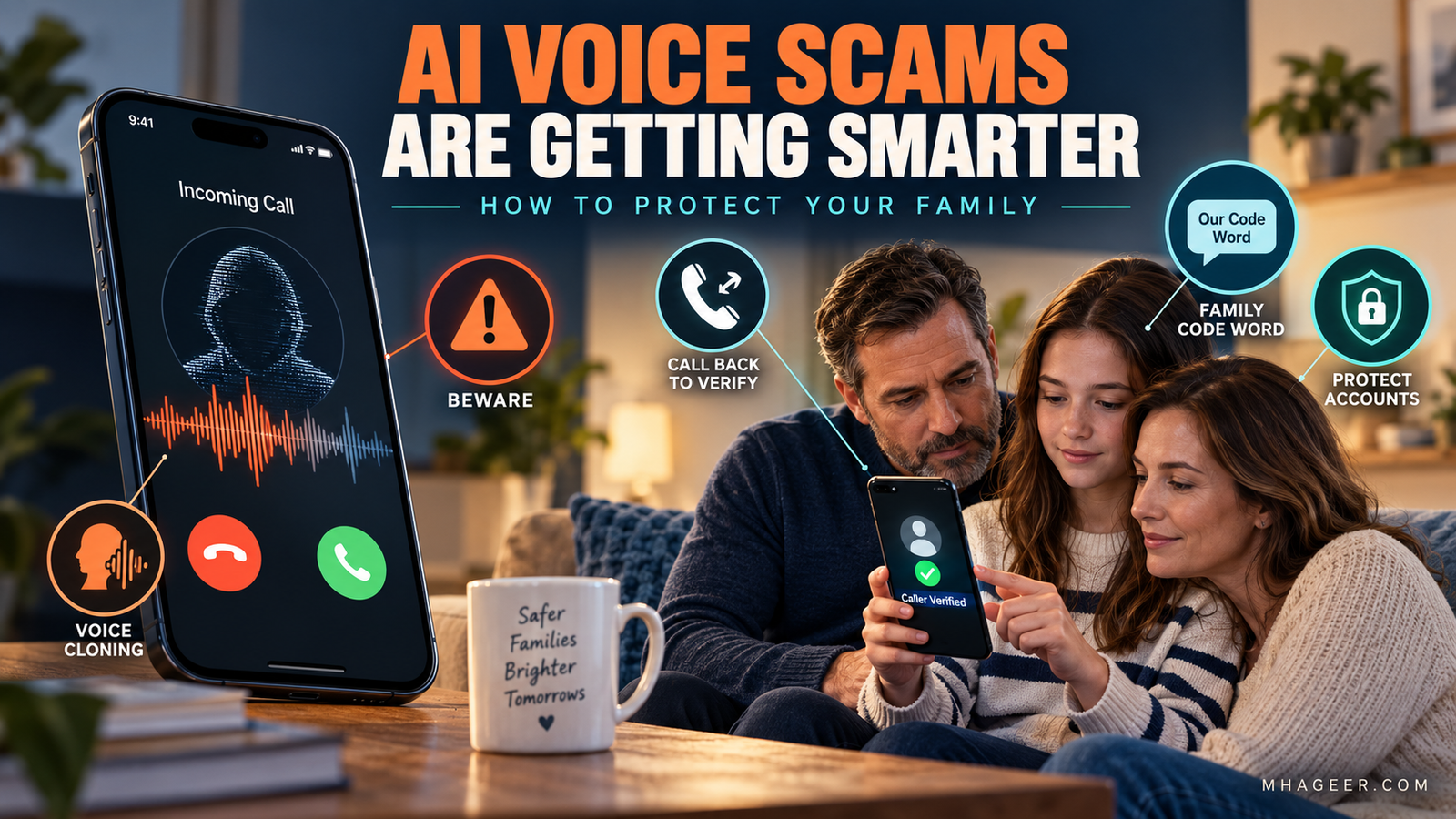
Artificial intelligence can now help criminals create convincing messages and imitate a person’s voice. The FBI warns that criminals use AI-generated audio, video, messages, and fake profiles to impersonate trusted people and pressure victims into sharing information or authorizing payments. FBI warning about AI-powered scams

Generated editorial illustration representing an AI voice-cloning scam.
How an AI Voice Scam Works
A criminal may collect a short audio sample from a public social-media video, voicemail greeting, livestream, or other recording. Voice-cloning software can then produce speech that sounds similar to the person in that sample.
The scammer calls a relative and invents an emergency: an arrest, accident, kidnapping, medical problem, missed flight, or stolen wallet. Another person may join the call pretending to be an attorney, police officer, doctor, or government employee.
The story is designed to create panic before the victim has time to think. The Federal Trade Commission warns that scammers can use a short recording to clone someone’s voice and strengthen an existing family-emergency scheme. FTC consumer guidance
1. Pause When Someone Creates Urgency
Urgency is one of the clearest warning signs.
A real emergency may require quick action, but taking 60 seconds to verify the situation will rarely make it worse. Do not allow the caller to control your decision by demanding secrecy, threatening consequences, or keeping you continuously on the phone.
Ask for the person’s name, location, and details about what supposedly happened. Avoid giving the caller information they can use to improve the story.
2. Hang Up and Call Back Yourself
Do not trust the number displayed on Caller ID. Phone numbers can be spoofed to look like a relative, bank, police department, or local business is calling.
End the conversation and call the person directly using a number already saved in your phone. If they do not answer, contact another relative, friend, workplace, school, or other trusted person who can confirm where they are.

Generated editorial illustration: independently calling a trusted number to verify an emergency.
If the caller claims to represent a bank or government agency, locate the organization’s official number independently. Do not call a number provided in the suspicious message.
3. Create a Private Family Code Word
Choose a memorable word or short phrase that family members can use during a real emergency. It should not be a birthday, pet’s name, school mascot, or anything visible online.
Everyone should understand one simple rule: if a caller claims to be a relative and cannot provide the code word, no money or sensitive information will be shared until the situation is independently verified.

Generated editorial illustration: a family establishing a private emergency code word.
Review the plan with older relatives and teenagers. They may be approached differently, but both groups can be targeted with emotionally convincing stories.
4. Ask a Question a Scammer Cannot Research Easily
Ask something only the real person should know—but avoid common facts that might appear on social media.
A useful question could reference a private family joke, an unpublished memory, or a detail from a recent conversation. Do not rely on a single question if the request involves money. Always complete the independent callback too.
5. Recognize Suspicious Payment Requests
Scammers often request payment methods that are fast and difficult to reverse. Treat demands involving gift cards, cryptocurrency, wire transfers, cash deliveries, or payment apps as major warning signs.
No legitimate police officer, court, or government agency will demand that you solve an arrest through gift-card numbers.

Generated editorial illustration showing common high-pressure payment warnings.
Never read gift-card numbers over the phone or send a picture of the card. Once the number is shared, the money may disappear quickly.
6. Protect the Information Criminals Can Collect
Review the privacy settings on social-media accounts and consider limiting public access to personal videos, travel plans, family relationships, phone numbers, and workplace details.
This will not make voice cloning impossible, but it can reduce the amount of material criminals have available to build a believable story.
Enable multifactor authentication on email, social media, financial services, and other important accounts. The FBI recommends multifactor authentication because it makes unauthorized access more difficult even if a criminal obtains a password.
7. Do Not Depend Only on Detecting a Fake Voice
Synthetic speech may contain strange pauses, unusual pronunciation, inconsistent background noise, or a voice pitch that does not sound quite right. Deepfake videos may show unnatural blinking, facial movement, shadows, or lighting.
Generated editorial illustration representing account security and scam verification.
Those clues can help, but they are not a dependable test. AI output is improving, and an ordinary bad connection can also sound strange. The strongest defense is verifying the request through a separate, trusted communication channel. The FBI maintains additional guidance on recognizing synthetic content.
What to Do If You Already Sent Money
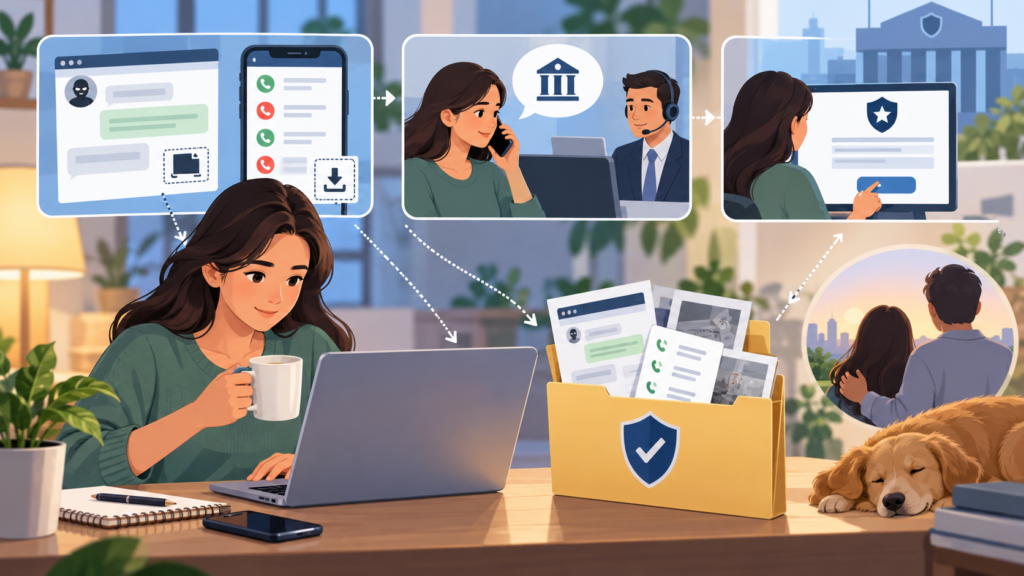
Contact your bank, card provider, payment service, or cryptocurrency platform immediately. Explain that the transaction resulted from fraud and ask whether it can be stopped, recalled, or flagged.
Save the phone number, messages, usernames, payment records, receipts, screenshots, and any audio or voicemail. Do not delete the conversation simply because it is upsetting.
Generated editorial illustration: preserving evidence and reporting a suspected scam.
Report consumer fraud at ReportFraud.ftc.gov and cyber-enabled crime through the FBI’s Internet Crime Complaint Center. If someone may be in immediate physical danger, contact 911 or local law enforcement instead.
Final Take
AI may make a fake voice sound convincing, but it cannot stop you from hanging up and checking the story yourself.
Create a family code word today. Agree that no one will send emergency money without a second form of verification. That five-minute conversation could prevent a frightening phone call from becoming an expensive mistake.